.
.
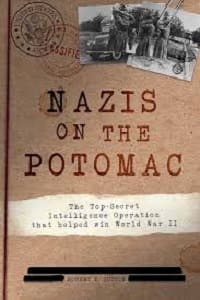
by Robert K. Sutton.
Softcover (6.0×9.0 inches). 243 pages. 2025.
Subtitle: The Top-Secret Intelligence Operation That Helped Win World War II
This second edition covers the interrogation of German POWs at Fort Hunt in Virginia by using eavesdropping devices, German- and Austrian-born Jewish refugees, and “stool pigeons” inserted into the POW population. The POWs were primarily Germans, but later included some Japanese officers and soldiers.
After short bios (based on oral histories) of numerous US interrogators, the process of extracting information by a variety of means is analyzed and explained. Some of this information was fed back directly to the front lines, some chalked up as nice to know, and some filtered back to Allied POWs in German hands. For example, documents and money collected from German POWs were copied and sent back to Allied POWs to help with forging documents useful in escapes.
Chapter 8 (p125+) was the most interesting of the chapters: feeding information to intel to help create books with colored covers. The Red book covered German OOBs, the Gray book covered installations and bases, the Yellow book covered the German replacement army, and the Green book covered Japanese OOBs.
One typo: Goering was “scheduled to be hanged on September 30, 1946. He cheated the hangman, however, and committed suicide on October 15, 1946.” The dates are likely switched as it seems difficult for an already dead Goering to commit suicide, or the actual hanging date is missing.
The book contains 39 black and white photos, one black and white illustration, 10 color photos and one color illustration.
While I had known about British efforts to glean information from German generals housed in rural estates, this is the first time I ran into US efforts — based in part on British successes.
Enjoyed it.
— Reviewed by Russ Lockwood