.
.
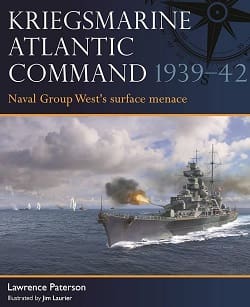
by Lawrence Paterson.
Softcover (7.25×9.75 inches). 80 pages. 2025.
Subtitle: Naval Group West’s Surface Menace
I thought I had reviewed a similar Osprey, so I went looking. Aha, close: Big Guns in the Atlantic: Raid 55, which covered Germany’s battleships and cruisers that went hunting for British convoys from 1939 to 1941. So, there is a bit of duplication between the two titles. Certainly ship specs and common actions receive the same overview treatment.
This volume covers the German raiders who scoured the Atlantic and Indian Oceans in the first half of WWII. Specs, actions, and so are receive an overview to ease you into the topic.
How Naval Group West operated offers a high-level recap and analysis of command and control, including how to deal with numerous British air raids of German capital ships in French ports, Hitler’s initial hamstringing of operations as he expected to sign a deal with the British to end the war in the West, and a somewhat convoluted command structure.
One probable typo regards the Z Plan (p7): Germany would be “ready for Atlantic warfare by June 1936” with six battleships, four carriers, four cruisers and 247 U-boats. The date is likely 1946, as Hitler only became Chancellor of Germany in 1933 — a lot to build in three in a half years if the 1936 date is correct.
The booklet contains 41 black and white photos, three color maps, three color diagrams, and three color two-page action illustrations.
Obviously, you’ll find differences between Fleet 11 and Raid 55. Kriegsmarine Atlantic Command covers an extra year than Big Guns in the Atlantic and this volume discusses more of the command and control issues facing the Germans. Put both together and you’ll have a relatively comprehensive overview of operations. Add in Battle of Atlantic 1: Campaign 408 and you’ll get the U-boat component as well — hmgs.org holds the reviews of Raid 55 and Campaign 408.
Enjoyed it.
— Reviewed by Russ Lockwood