.
.
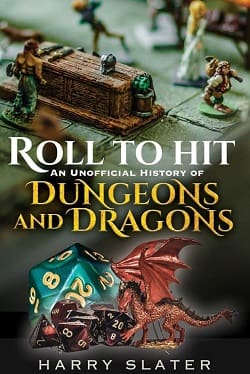
by Harry Slater.
Hardback (6.4×9.4 inches). 205 pages. 2025.
As you can gather from my recaps of Dungeons and Dragons (D&D) sessions, I’ve gotten back into RPGs the last year or so — after a pretty long break since the early 1980s with the occasional session in the 2000s.
D&D came from wargaming. Gary Gygax and Dave Arneson bonded over the Avalon Hill game Gettysburg. They were members of the Midwest Military Simulation Assn (MMSA), where they were introduced to a 1960s Napoleonic game called Braunstein, created by MMSA member David Wesley. Players were single figures in a town and soon interacted amongst each other for one purpose or another — an early form of RPG. Braunstein was supposedly an offshoot of a game called Strategos from the 1880s.
The 1973 Gygax and Arneson variation was set in medieval times, took on a Tolkien-esque tinge, and was refined to a point. In 1973, they went to Avalon Hill, which declined to publish D&D. Hindsight about the companies that passed on creative works is always wonderful — for example, a host of publishers declined to publish The Hunt for Red October and Harry Potter novels.
In any case, the two found a money partner in Don Kaye, formed TSR in 1973, and published an ECW set of miniatures rules Cavaliers and Roundheads that didn’t do well. Brian Blume came in as another money partner and TSR published 1,000 copies of D&D (p25). It took a while to sell out, but they printed another 1,000 copies. In 1975, they published the two main personal campaigns, Greyhawk and Blackmoor, as supplements with more rules. Alas, they took on too much of a Tolkien tinge and had to rename some of the names: hobbits became halflings, ents became treents, and the Balrog became Balor.
By the late 1970s, the three manuals were released, Arneson sued over royalties, and small companies popped up to publish RPGs and supporting materials. The biggest rival was/is Paizo Pathfinder.
And so the history highlights continued through the pages. I found some chapters, especially the business mismanagement and infighting, fascinating, but wanted more. The layers of rules as D&D went through a variety of versions was equally interesting. I recall once playing 3.0, then the next session was 3.5, and now it’s 5.0 –- so living the text. The back and forth over open licensing permissions from TSR to Wizards to Hasbro was also enlightening.
I have a few quibbles: one minor, one major, and one annoying.
The minor one revolves around the mediocre selection of black and white photos. Just about all are generic Shutterstock images. Here you have a full history of the most popular RPG on the planet and the center photo section is a bunch of uninspiring, generic, and often blurry photos. Rolled a “1” on the photo section.
The major quibble: the book is pretty much info from internet sites. For example, the Braunstein info comes from the Wikipedia page, including the reference to Strategos. Sure, it’s an excellent spot to start, but with all the people who worked at TSR, Wizards of the Coast, and Hasbro, I was expecting a lot more original research from interviews. Yes, a few interviews are listed from magazines. Some books are listed, too. But the bulk seems to come only from the internet. A missed opportunity, indeed. Rolled a middlin’ “10.”
The annoying quibble: constant amateurish insertions of “teasers” as in: “we’ll get to (insert topic) in an upcoming chapter.” If you need these to pull a reader through the text, you need to reorganize the progression of information. I can’t say this is the first book with such annoyances, but if this is a trend, editors should demand better organization to eliminate them. Rolled a “7” here.
One possible bit of confusion: Gygax’s Chainmail rules were “co-written with a hobby shop owner named Jeff Perren” (p27), but later, “Chainmail co-creator Steve Perrin” (p34). To Wikipedia: The Chainmail entry had mentions of “Jeff Perren” and “Perrin” (no first name). Popping Steve Perrin into the search engine finds he is the designer of RuneQuest.
In any case, Roll to Hit provides a compiled version of the origins and expansion of D&D. It lacks primary research (interviews), or at least none is listed in the bibliography, but the prose flows well enough from highlight to highlight. The nostalgia factor is high and my newfound adventuring attests to the longevity of the concept, no matter how many times the game system has been revised. Overall, rolled a “16.”
Enjoyed it.
— Reviewed by Russ Lockwood