.
.
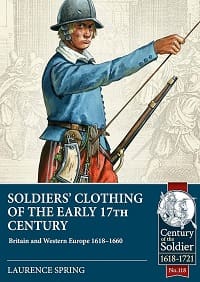
by Laurence Spring.
Softcover (7.2×9.7 inches). 347 pages. 2024.
Subtitle: Britain and Western Europe 1618-1660
This exhaustive analysis of uniform and equipment procurement, including a multitude of charts with prices, includes key information about regimental uniform colors — a boon to wargamers painting up 17th Century figures.
Gamers may not use the information about the number of stitches, differences in styles, and how tailors and seamstresses sewed them up, but it’s all there. Also included are fascinating examples of how contractors shortchanged the government, with delivery of shoddy clothing and shoes that fell apart. It seemed like a never-ending game: the government orders uniforms from a variety of companies and the companies substitute poorer quality materials or leave out parts (linings). Every so often, the government runs out of money and doesn’t pay, which may or may not be a contributing factor in the delivery of shoddy-quality clothing.
Then there’s the soldiers themselves, who are often charged for the clothing…which falls apart. And when pay gets in arrears, the soldiers sell the clothing. Accounts of raggedy-looking troops and victorious troops stripping prisoners of their clothing are not uncommon.
Armies covered are the English Trained Bands of the 1620s and 30s, followed by various Parliamentarian and Royal armies of the English Civil War. Also covered: New Model Army and armies from Denmark, Netherlands, France, Spain, Sweden, and Holy Roman Empire.
One typo: “clothing tor soldiers” (p150 should be “for.” Then again, I only read about half the book, for my interest in reading about the constant accounting of seemingly each and every contract faded. It’s well written given the repetitious nature of the subject matter, but you may get overwhelmed by such details. I skimmed the rest, which seemed more of the same, so if you love that sort of detail, this is the volume for you.
The book contains one black and white photo and 42 black and white period woodcut illustrations.
To my mind, the text and charts of regimental colors is the main draw for figure painters, followed by some examples of logistics that may prove useful in a campaign game. Those seeking the economics behind 17th Century uniform purchasing will devour every page.
Enjoyed it.
— Reviewed by Russ Lockwood