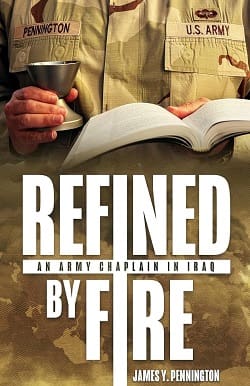
by James Y. Pennington.
Hardback (6.2×9.3 inches). 197 pages. 2026.
My impression of Army chaplains revolve around conducting services or last rites, often out in the field, or maybe offering a prayer for better weather, as in that scene from the movie Patton. The services part is certainly true of this brigade-level chaplain Pennington. Yet he also served as an impromptu morale officer in the rear areas as well as front-line spiritual guide.
Coming out of the Baptist ministry, he volunteered at age 38 and was sent to the Mosul, Iraq, area for a year 2003-2004. Attached to a Stryker brigade, he split his time between brigade HQ area and front-line units. As he put it, he concentrated on supplying spiritual support to those who sought him out, performing makeshift services, baptisms, and other ceremonies.
What is interesting is that since he did not carry a gun, he was assigned an assistant who did. In those early days, snipers, mortars, and other attacks could happen at any time. Indeed, he narrowly escaped a mortar attack inside the brigade base. In the aftermath of this and other attacks, he aided the injured soldiers’ medical convalescences and survivors’ mental health. The anecdotes are quite poignant in their retelling.
This constant combat stress manifested into PTSD and a criticism of the US Army’s patchwork of mental health practices. He discusses a number of therapies and praised the work of the hospital in Germany during his six-week program. While “cured” might be too strong a word, two of the therapies helped him cope and then adjust to all that he witnessed in the war.
Of interest was how he perceived the war (mostly encapsulated p145-150) and made sense of the trauma and suffering — a chaplain’s search for meaning. He thought about the hope and transformation he witnessed among the death and destruction — the old woman who pushed her way through a crowd to vote in her first Iraqi election.
Being a chaplain, Pennington offers the view that God has a plan that we may not initially perceive but may, given contemplation and maturity, recognize in time. That’s my rather simplistic summary, but if you want a broader theological interpretation, matters of faith get discussed throughout the book.
The book contains 14 black and white photos and one black and white map.
Religion remains an important facet of the military ever since animal entrails were examined for ancient pre-battle portents. This memoir offers one aspect of ultramodern military service that may be mentioned in passing, but deserves a closer look. Here’s that closer look.
Enjoyed it.
— Reviewed by Russ Lockwood